
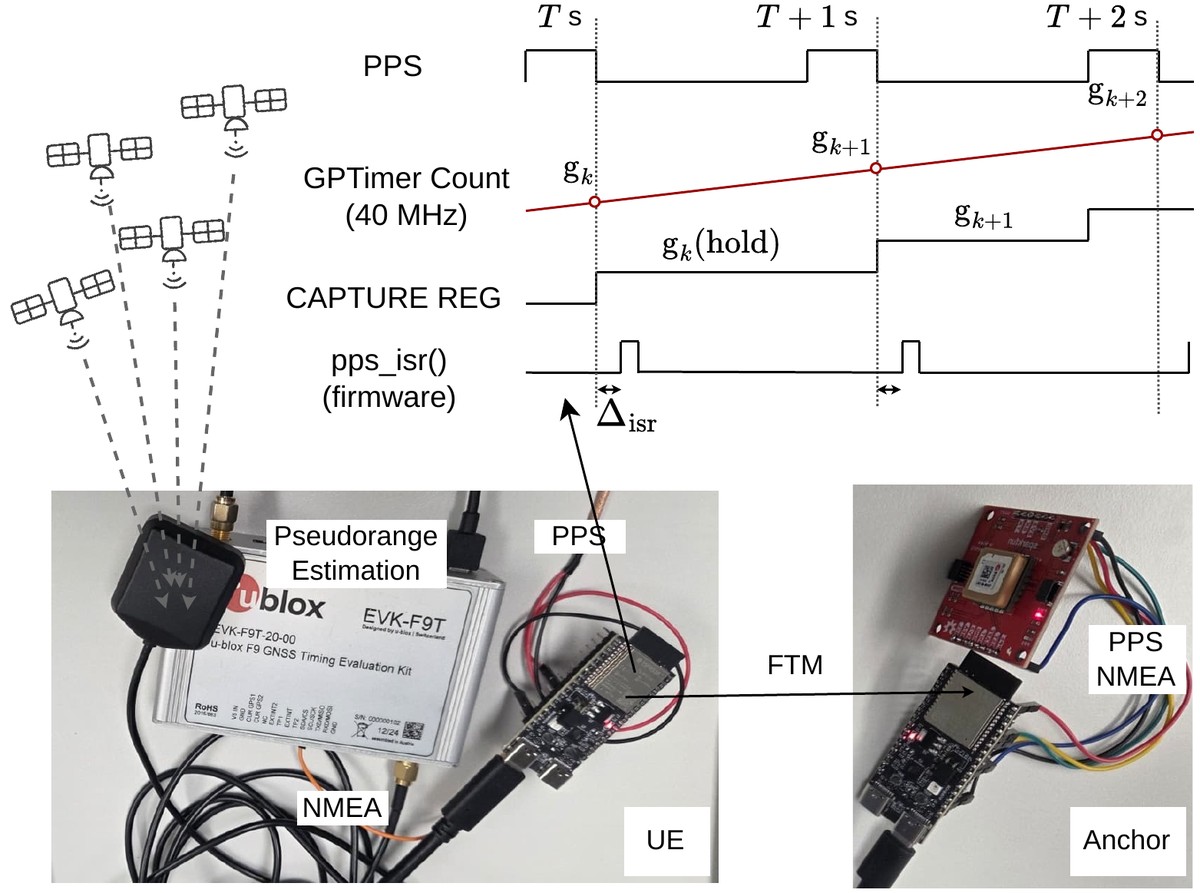
ComPASS test setup: a UE with a u-blox EVK-F9T GNSS receiver and an anchor exchange FTM measurements, above a timing diagram of PPS pulses captured on a 40 MHz timer.

UE and anchor test setup with GNSS timing.

Scalable and Verifiable Positioning (ComPASS)

ComPASS aims to provide secure and trustworthy positioning for applications that depend on reliable location information, including autonomous systems, transportation, and location-based services. These applications are vulnerable to spoofing attacks that can manipulate reported positions and compromise safety and security. This project develops methods to detect such attacks and demonstrates their practical feasibility in terrestrial and satellite environments.
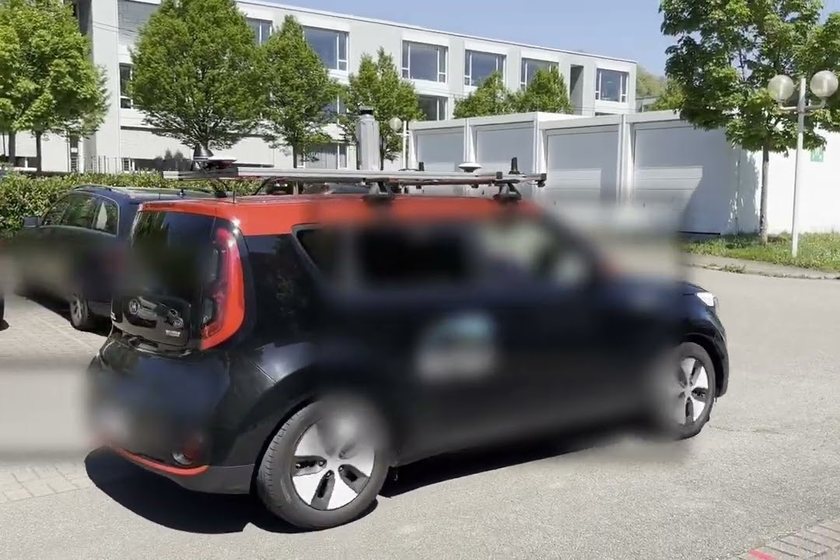
Still from a video of the test vehicle responding to a mirror-based LiDAR attack, with a play button.

Test vehicle reacting to a phantom obstacle.

Automotive Security (CYPHER-AV)

CYPHER-AV aims to improve the safety and security of autonomous vehicles by protecting their sensing systems against cyberattacks. Autonomous vehicles rely on sensors such as LiDAR, radar, and cameras to perceive their surroundings and make driving decisions. Attackers can manipulate these sensors or their data, potentially causing unsafe driving behavior and accidents. The project develops methods to detect and prevent such attacks and demonstrates their effectiveness through a secure sensor processing platform for autonomous vehicles.

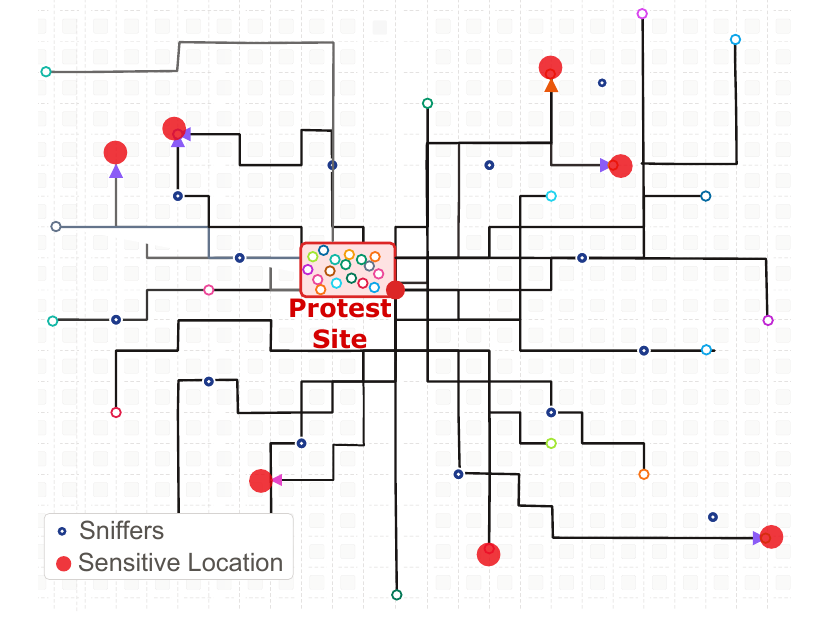
Map of sniffers and sensitive locations, tracing attendees from a protest site

Sniffers tracing protest attendees.

Location Privacy

Our research on location privacy aims to protect individuals from unauthorized tracking through wireless communication systems. Smartphones use temporary identifiers across cellular, Wi-Fi, and Bluetooth networks to limit tracking. However, combining information from these networks can allow attackers to reconstruct users’ movements, even when individual protocols implement privacy protections. Our work investigates these privacy risks, evaluates their impact in real-world settings and large-scale simulations, and identifies the requirements for stronger location privacy protections.

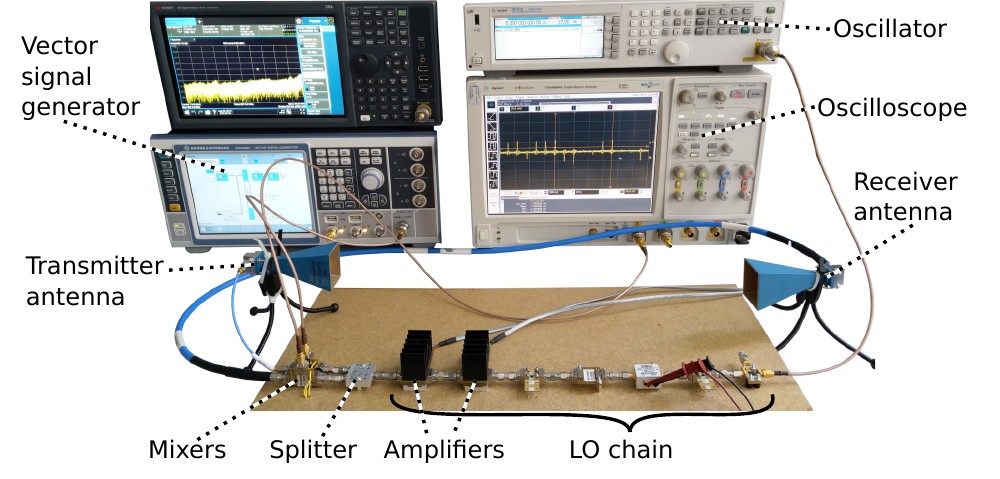
The labelled V-Range mm-wave setup from Fig. 12 of the paper: vector signal generator, oscillator, oscilloscope, transmitter and receiver antennas, mixers, splitter, amplifiers and LO chain.

The mm-wave test setup.

Proximity Verification

Our research on proximity verification aims to enable secure and reliable distance measurements between wireless devices. Applications such as passive keyless car entry, contactless payments, access control, and autonomous systems rely on accurate proximity information to make security-critical decisions. However, attackers can manipulate wireless signals to make devices appear closer or farther apart than they actually are, potentially enabling unauthorized access or unsafe system behavior. Our work analyzes these vulnerabilities in UWB, Wi-Fi, and 5G technologies and develops physical-layer security mechanisms to protect distance measurements against such attacks.